About Us


Essex Policing Plan
Summary of the Essex Policing Plan 1998/99


Contents:

The Making of the Plan

The Essex Police Authority

The Policing Priorities for Essex

Key Operational Goals

  1. Re: Young offenders
  2. Re: Partnership with Local Agencies
  3. Re: Drug - and alcohol - related crime
  4. Re: Detections of violent crime
  5. Re: Detections of burglaries of people's homes
  6. Re: Respond promptly to emergency calls
  7. Re: High visibility policing
  8. Re: Road traffic casualties

Financing the Plan


The Making of the Plan


It is now ten years since Essex Police introduced an Annual Plan to meet the concerns of the community and set priorities for the next twelve months.

In 1994, following the introduction of the Police and Magistrates Court Act, the Home Secretary laid down, for the first time, key national objectives which all forces had to take into account when drawing up their own plans. This change means that all three partners in policing, the Home Office, the Police Authority and the Chief Constable now participate in the making of the plan for Essex.

The Home Secretary first decides the key national objectives and then adds performance indicators against which achievements will be measured.

The Police Authority, having taken into account the views of the public and consulted the Police, extend the objectives to cover local concerns and publish the plan. They are subsequently required at the end of the planning year to report how the Essex Police have performed against the targets set for each of the objectives.

The Chief Constable incorporates the national and local objectives into a draft plan which is presented to the Police Authority. Once the plan is published, the Chief Constable is responsible for organising and managing the force to achieve the plan.

The Police Authority, in consultation with the Chief Constable, make arrangements to:-

  • Obtain the views of local people about matters concerning policing in the area
  • Obtain the co-operation of local people in preventing crime


There are thirteen Police and Community Consultative Groups (PCCGs) throughout the county. These groups hold regular meetings and are chaired by members of the Police Authority and run with the help of local police commanders. It is important that the Police Authority encourages the public to have realistic expectations about what the police can do. It is through these meetings that they manage the process. Consultation with the public helps the Police Authority to determine its policing priorities.


Details of PCCG meetings in each area can be found in the "Your Area" section of this site


The Essex Police Authority


Unitary Authorities

Local government restructuring has resulted in the creation of two unitary authorities for Southend and Thurrock. To reflect these changes, the composition of the Police Authority has been altered to include elected members from the unitary authorities, who will take up their full duties on 1st April 1998.

The Essex Police Authority

The Essex Police Authority is made up of seventeen members - nine councillors, seven from Essex County Council and one each from Thurrock and Southend-on-Sea Councils; three magistrates and five locally appointed independent members.

The Authority has four committees and panels which meet as and when required:- a Chief Officers Committee, a Civilian Staff Committee, a Strategy & Budget Panel and an Audit Panel. Meetings of the full Police Authority are open to members of the public and will be held at County Hall in Chelmsford on the following dates:-

  • 1 June 1998 (Annual Meeting)
  • 14 September 1998
  • 7 December 1998
  • 15 February 1999 (Budget)
  • 22 March 1999


Further information about the Essex Police Authority, including contact details for all 17 members, can be obtained from, or comments sent to:-

Clerk of the Essex Police Authority,
PO Box 11
County Hall
Chelmsford
Essex CM1 1LX


The Policing Priorities for Essex


Each year the Home Secretary sets a number of national objectives which have been included in this plan. As well as the national aims for policing, the Police Authority has developed a number of extra objectives which were included following public consultation.


Service Delivery Standards

To help Essex Police deliver the objectives, a programme of Service Delivery Standards was introduced in 1993. They are a clear statement of the value Essex Police places on service delivery in the key areas of policing. These standards are set out in the key service areas of - Crime, Traffic, Public Order, Public Contact and Community Affairs. They ensure that we measure not only what we do but how we do it. There are currently 14 Service Delivery Standards with others due to be developed in the coming year.

See the section called "Our Service Standards" on this site


GOAL 1:
To deal speedily and effectively with young offenders and to work with other agencies to reduce re-offending.


Targets

1. To have monitored, and responded when necessary to, the percentage of cases relating to young offenders dealt with within relevant pre-trial issues time guidelines and the percentage of cases meeting joint performance management quality targets.

2. To have consulted with other relevant agencies, established local mechanisms to measure activity on, and the success of, work in partnership to provide a quicker and more effective local response to youth crime.

3. Each division to have set relevant local objectives on the above.

Performance Indicator:

How we compare against the targets.


(Home Secretary's Key Objectives and measures are printed in blue)


GOAL 2:
To target and reduce local problems of crime and disorder in partnership with local authorities, other local agencies and the public.


Targets

1. To have established local mechanisms in partnership with other agencies to measure activity on and success in tackling problems of crime and disorder with local targets for performance.

2. To have mechanisms in place locally to measure forces' success in tackling repeat victimisation.

3. To create the confidence to report incidents of racially motivated crime.

4. To have reduced the number of: a) burglaries of people's homes, b) other burglaries, c) offences of violence, and d) theft of and from motor vehicles.

5. Each division to have set relevant local objectives on the above.

Performance Indicators:

1, 2, 3, 5 How we compare against the targets.

4, The change in the number of offences of burglary dwelling, other burglaries, violent crime and autocrime. (Territorial Divisions will show their target reduction figures in their respective annuals plans).


(Home Secretary's Key Objectives and measures are printed in blue)


Our Service Delivery Standard on dealing with victims of racial harassment covers this specific and sensitive area of crime and encourages a focus on developing race relations.

See the section called "Our Service Standards" on this site)


GOAL 3:
To target drug - and alcohol - related crime in partnership with other local agencies.


Targets:

1. To have monitored the number of arrests for the supply and possession with intent to supply controlled drugs per 10,000 population, to establish a baseline for future targets.

2. To have developed an approach to monitoring alcohol-related crime.

Performance indicators:

1. The number of arrests for the supply and possession with intent to supply controlled drugs per 10,000 population.

2. Performance against the target.


(Home Secretary's Key Objectives and measures are printed in blue)


GOAL 4:
To maintain and, if possible, increase the number or detections for violent crime.


Targets

1. To have detected 70% of violent crimes.

2. To have detected 4150 violent crimes.

 Performance Indicators:

1. The percentage of violent crimes detected.

2. The number of violent crimes detected.


While this objective emphasises the importance both the Police Authority and the Chief Constable attach, to dealing with violent crime, it is important to stress that these crimes account for just 6% of all the crimes reported to Essex Police in 1996/97.

 Working with other agencies to reduce the fear of crime is a vital part of our work.


(Home Secretary's Key Objectives and measures are printed in blue)

A number of our Service Delivery Standards cover different aspects of dealing with violent crime. These include 'Dealing with assaults and woundings', 'Dealing with victims of domestic violence' and 'Dealing with allegations of child abuse'. Two new Service Delivery Standards, 'Dealing with rapes and serious sexual assaults,' and 'Dealing with homicides' are due to be introduced in 1998.


GOAL 5:
To increase the number of detections for burglaries of people's homes.


Targets:

1. To have detected 14% of burglaries of dwellings by primary means and 24% overall.

2. To have detected 1050 burglaries of dwellings by primary means and 1790 overall.

Performance Indicators:

1. The percentage of burglaries of people's homes detected by primary means.

2. The percentage of burglaries of people's homes detected overall.

3. The number of burglaries of people's homes detected by primary means.

4. The number of burglaries of people's homes detected overall.


(Home Secretary's Key Objectives and measures are printed in blue)

Ensuring a quality service to the victims of burglary is the emphasis of our Service Delivery Standard 'Dealing with burglary of people's homes'. A leaflet about our standards is sent to all victims of house burglary.


GOAL 6:
To respond promptly to emergency calls from the public, and to non-emergency telephone calls made to police stations.


Targets

1. To have answered 81% of 999 calls within the 10 second target time.

2. To have attended 86% of immediate response incidents within the local target times of 12 minutes (urban) and 16 minutes (rural).

3. To have answered 78% of non-emergency calls to our 13 main switchboards within the 20 second standard.

4. To have answered 82% of non-emergency calls to other published police station numbers within the 20 second standard.

Performance Indicators:

1. The percentage of 999 calls answered within 10 seconds.

2. The percentage of immediate response incidents attended within 12 minutes (urban) and 16 minutes (rural).

3. The percentage of non-emergency calls to the main switchboards answered within 20 seconds.

4. The percentage of non-emergency calls to other police stations answered within 20 seconds.


(Home Secretary's Key Objectives and measures are printed in blue)


A Service Delivery Standard sets out our commitment to 'Responding to calls and correspondence' quickly and efficiently.


GOAL 7:
To provide high visibility policing.


Targets:

1. To have maintained the amount of time spent by operational uniformed constables outside police stations to at least two thirds of their duty time.

2. To increase the number of Special Constables to more than 643.

3. To increase the number of monthly hours worked by Special Constables to above 16190.

Performance Indicators:

1. The amount of duty time spent by operational uniformed constables outside police stations.

2. The number of Special Constables.

3. The number of Special Constable hours worked


High visibility policing is covered by a Service Delivery Standard.


GOAL 8:
To reduce road traffic casualties, in partnership with other agencies and the community.


Targets:

1. To reduce road traffic accident casualties to less than 8280.

Performance Indicators:

1. The number of road traffic accident casualties.


Policing of traffic incidents is covered by two Service Delivery Standards dealing with fatal road crashes, and collisions involving injury. A third Service Delivery Standard dealing with non-injury collisions is due to be introduced during 1998.


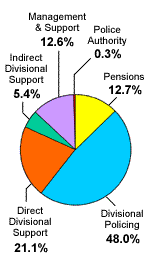
Financing the Plan


The Government settlement for Essex Police represents an increase of 1.1% over 1997/98. The implications for the Authority's budget are that savings and the use of reserves have had to be found to sustain current levels of service.

Within the settlement are two special grants for the continued recruitment of additional officers and also for the Home Secretary's objectives. Indications reveal that future years' funding will necessitate greater savings having to be found.


Next year's planned spending means that almost 70% of the annual budget is again targeted towards direct operational policing.

System developments are well underway to provide better costing and awareness towards agreed objectives and priorities.


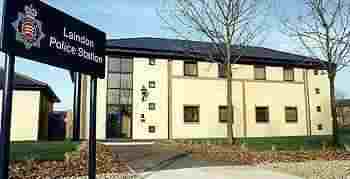
Laindon's new police station


Capital Expenditure

This year Essex Police will spend £4.6 million on a range of major projects. The projects range from building and refurbishment on police premises, information technology developments and the purchase of new vehicles and equipment.

Some of the more significant areas of expenditure planned for the coming year are as follows :-

  • £190,000 on a scheme to convert the old court and refurbish part of existing office space at Brentwood Police Station.
  • £250,000 on intelligence search/analysis software.
  • £252,000 to replace an existing major enquiry computer system.
  • £1.274 million to replace the existing command and control computer system.
  • £1.08 million on replacements for the vehicle fleet.


About Us